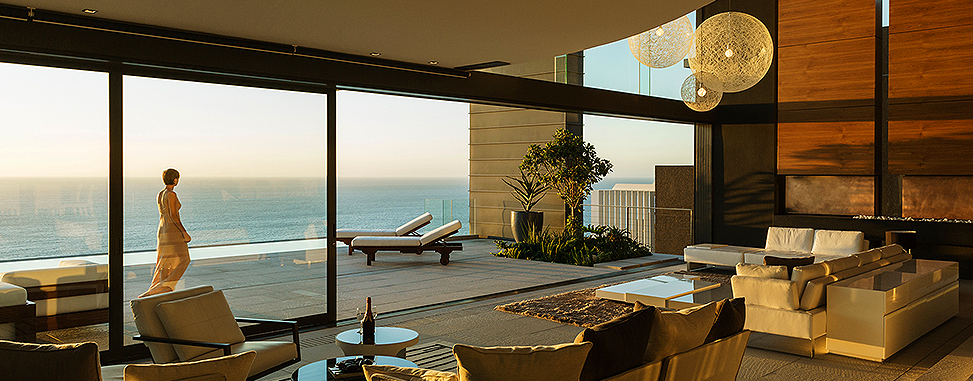
Acquiring an asset is an act. Living in it is a process. In the first case, what matters is what is signed. In the second, what matters is what unfolds when no one is watching.
Living reveals itself over time, through details that may seem small but never are: the natural rhythm of a morning, light that does not exhaust, silence that feels intentional rather than empty, the emotional temperature of a space. Some properties present beautifully yet demand constant effort to inhabit. Others are lived with an almost effortless elegance. They do not require continual adjustment or force their owners to operate them as if they were a set.
It is there that a difference begins to emerge—one that is quietly redefining the value of extraordinary assets.
Time as a Real Measure of Value
For a long time, time was treated as an administrative variable: days of use, occupancy rates, projected returns. A practical way to measure, but insufficient to explain why certain spaces become central to someone’s life while others remain peripheral, even when they meet every “correct” indicator.
Some assets make time feel like an obligation. One arrives, uses the space, fulfills an expectation—social, familial, even symbolic—and leaves. The property functions, but it does not retain. Not because it lacks quality, but because it introduces friction. It demands attention, management, constant adaptation.
Other spaces behave differently. They do not interrupt rhythm or impose pace. They integrate naturally into life and, as a result, begin to accumulate permanence. This is not a conscious decision; it is a consequence. Staying longer feels logical. Returning more often becomes instinctive. Routines begin to form around the space.
This behavior is difficult to translate into traditional metrics, yet it has a tangible effect on perceived value. An asset that does not require constant management and accompanies daily life with discretion tends to occupy a stable place in the life of its owner. And over time, stability carries more weight than novelty.
New Criteria for Valuing Extraordinary Assets
When value is no longer measured solely through price and financial projection, the reading of an asset changes. Less visible criteria emerge—yet far more decisive in the lived experience of a space. These criteria are not entirely new; what is new is the importance they now hold in decision-making.
Privacy as a Primary Asset
In assets that are truly lived, privacy is not announced—it is felt. It is not about isolation or social distance, but about control: control over access, interruptions, exposure. The difference between “appearing private” and truly being private becomes evident quickly. In how a space filters the outside world. In how it manages movement, views, sound. In its ability to allow presence without availability.
Context as a Source of Value
Context extends far beyond proximity to services or points of interest. It includes the rhythm of a place, its density, the character of the surroundings, the relationship with nature, even the quality of air—both literal and symbolic.
Some environments push life into acceleration. Others return a slower, more precise version of it. This is why certain spaces become refuges without ever declaring themselves as such. Context works quietly, sustaining the experience and making it repeatable. And in luxury, it is repetition that ultimately confirms truth.
Flexibility and Long-Term Relevance
Time also tests design. A strong asset is not one that looks contemporary today, but one that continues to make sense as routines evolve, life stages shift, work patterns change and even rest is redefined.
Spaces that are lived well do not force a single way of living. They allow evolution within them. And when a place supports that evolution, value stops depending on trends and begins to rest on coherence.
Returns That Are Not Always Financial
When discussing assets, return is often reduced to a number. In luxury real estate, financial return remains important—but it no longer tells the full story.
Some returns are felt before they are measured: reduced mental friction, greater focus, rest that genuinely restores, relationships that feel lighter because the environment supports them. These returns do not compete with financial ones; they reinforce them. An asset that integrates into life is cared for, used, preserved with a different intention.
This is not about emotion in a superficial sense. It is about consistency. Arriving and feeling that a space receives without demanding anything in return. Knowing that it does not require performance, exposure or constant justification. In extraordinary assets, emotional return resembles stability—a calm that is not the absence of activity, but the presence of control.
When that consistency exists, the asset shifts in importance. It stops being abstract “patrimony” and becomes a fixed point—one that structures time, decisions and even how the future is imagined.
Assets That Are Lived, Not Displayed
Public validation has lost its appeal—not because luxury no longer exists, but because exposure has become costly. In this context, discretion is no longer just an aesthetic choice; it is a position.
A discreet asset is not designed to speak to everyone. It is designed to function impeccably for the person who inhabits it. That difference is perceived as a form of elegance that requires no explanation.
It is evident when a space no longer feels like a project, but like a place. When light does not exhaust. When sound has been considered. When circulation makes sense. When materials do not merely look good, but age with dignity. When design does not impose an idealized life, but accompanies a real one.
In the world of assets, this matters more than it appears. What is lived well sustains value more steadily than what is simply admired.
Measuring Value Through Experience
Not all assets are meant to be lived. And not all properties generate experience. In contemporary luxury, value increasingly shifts toward how a space functions within everyday life.
True value emerges when an asset stops being an object of admiration and becomes a space of inhabitation—one that protects privacy, integrates with its environment and supports daily life without seeking attention.
When luxury is no longer about what is shown, but about what is preserved: time, silence, control, well-being. There—and only there—does an asset become truly extraordinary.

